On this page
- What Is a Carbide End Mill?
- Why Are Solid Carbide End Mills Used in CNC Machining?
- Types of Solid Carbide End Mills
- 2-Flute Solid Carbide End Mills
- 3-Flute Solid Carbide End Mills
- 4-Flute Solid Carbide End Mills
- Multi-Flute Solid Carbide End Mills
- Ball Nose Solid Carbide End Mills
- Corner Radius End Mills
- Roughing End Mills
- Finishing End Mills
- Common Solid Carbide End Mill Types at a Glance
- Uses of Solid Carbide End Mills
- Slot Milling
- Pocket Milling
- Profile Milling
- Side Milling
- Contour Milling
- Roughing
- Finishing
- Die and Mould Machining
- Benefits of Solid Carbide End Mills
- High Hardness
- Better Wear Resistance
- Higher Cutting Speeds
- Better Surface Finish
- High Dimensional Accuracy
- Improved Productivity
- Wide Range of Applications
- How to Choose the Right Carbide End Mill
- 1. Consider the Workpiece Material
- 2. Select the Correct Flute Count
- 3. Choose the Right End Mill Diameter
- 4. Check the Cutting Length
- 5. Consider the Overall Tool Length
- 6. Select the Appropriate Coating
- 7. Choose the Correct Geometry
- 8. Consider Machine Capability
- 9. Consider the Machining Operation
- 10. Check Cutting Parameters
- Carbide End Mill Coatings
- TiN Coating
- TiCN Coating
- TiAlN Coating
- AlTiN Coating
- AlCrN Coating
- Carbide End Mill Selection by Material
- Carbide End Mill vs HSS End Mill
- Common Problems When Using the Wrong End Mill
- Excessive Tool Wear
- Poor Surface Finish
- Tool Chipping
- Tool Breakage
- Poor Chip Evacuation
- Excessive Vibration
- Tips for Getting Better Performance from Solid Carbide End Mills
- Industries That Use Solid Carbide End Mills
- Frequently Asked Questions About Solid Carbide End Mills
- What is a Carbide End Mill used for?
- Which Carbide End Mill is best for aluminium?
- Which Carbide End Mill is best for steel?
- How many flutes should a Carbide End Mill have?
- What is the difference between a 2-flute and 4-flute end mill?
- What coating is best for Carbide End Mills?
- Can Carbide End Mills be used for stainless steel?
- Can Carbide End Mills cut hardened steel?
- What is a Ball Nose Carbide End Mill used for?
- What is a Corner Radius End Mill?
- How long does a Carbide End Mill last?
- Why does my Carbide End Mill break?
- How can I choose the right Carbide End Mill?
- Where can I buy Carbide End Mills in India?
- How much do Carbide End Mills cost in India?
- Related CNC Cutting Tools
- Why Choose Metaldur for Solid Carbide End Mills?
- Get the Right Carbide End Mill for Your Application
- Contact Metaldur for:
Choosing the right Carbide End Mill is important for achieving accurate machining, better surface finish, longer tool life, and efficient material removal. The wrong end mill can lead to excessive tool wear, poor surface finish, vibration, broken cutting edges, and higher machining costs.
With different end mill types, flute configurations, coatings, diameters, geometries, and cutting lengths available, selecting the correct tool can be difficult, especially when machining different materials. Whether you are working with steel, stainless steel, aluminium, cast iron, alloy steel, or hardened materials, the right carbide milling tool should be selected according to the workpiece material, machining operation, machine capability, and cutting conditions.
This guide explains how to choose the right Carbide End Mill, the different types available, their uses and benefits, and the important factors to consider before purchasing.
What Is a Carbide End Mill?
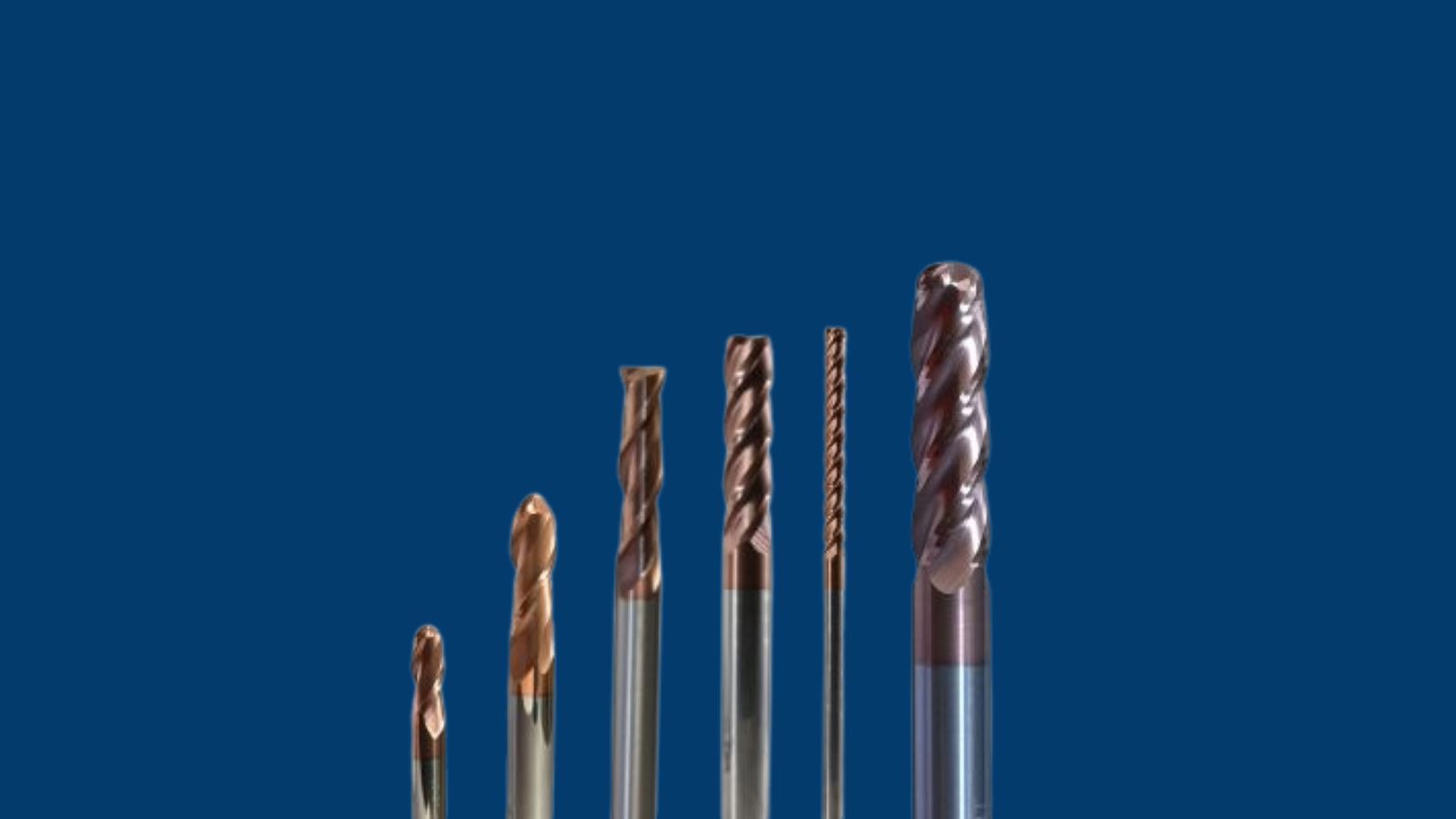
A CNC end mill is a rotary cutting tool used with CNC milling machines and machining centres to remove material from a workpiece. Unlike drills, which are primarily designed to create holes, end mills can perform several operations, including side milling, slotting, profiling, pocketing, contouring, and finishing.
Solid carbide end mills are made from carbide material, which provides high hardness, wear resistance, and cutting stability. Depending on the application, end mills can also have coatings designed to improve heat resistance and tool life.
Why Are Solid Carbide End Mills Used in CNC Machining?
Solid Carbide End Mills are widely used in CNC machining because they provide high hardness, wear resistance, cutting stability, and the ability to operate at higher cutting speeds when suitable machining conditions are used. Their different geometries and flute configurations make them suitable for various milling operations.
They are commonly used for:
- Slot milling
- Pocket milling
- Side milling
- Profile milling
- Contour milling
- Face milling
- Roughing
- Finishing
- 3D surface machining
- Die and mould machining
Types of Solid Carbide End Mills
Different milling operations require different tool geometries. Selecting the correct type helps improve machining performance and surface finish.
2-Flute Solid Carbide End Mills
2-flute end mills provide greater chip space and are commonly used for aluminium and other non-ferrous materials.
3-Flute Solid Carbide End Mills
3-flute end mills offer a balance between chip evacuation and cutting efficiency. They can be suitable for aluminium and general-purpose milling applications where both productivity and surface finish are important.
4-Flute Solid Carbide End Mills
4-flute end mills provide more cutting edges and are widely used for steel, stainless steel, and general CNC machining. They can provide good surface finishes while maintaining efficient material removal.
Multi-Flute Solid Carbide End Mills
End mills with more flutes are generally used when higher feed rates and improved finishing performance are required. The suitable flute count depends on the workpiece material, machine, cutting parameters, and operation.
Ball Nose Solid Carbide End Mills
Ball nose end mills have a rounded cutting tip and are commonly used for:
- 3D contouring
- Die and mould machining
- Curved surfaces
- Complex profiles
- Finishing operations
Corner Radius End Mills
Corner radius end mills have a rounded corner between the end and side cutting edges. This design can improve cutting-edge strength and reduce the risk of corner chipping.
Roughing End Mills
Roughing end mills are designed to remove large amounts of material efficiently. Their specialized cutting geometry helps break chips into smaller pieces during heavy material removal.
Finishing End Mills
Finishing end mills are designed to produce smoother surfaces and accurate profiles. They are generally used after roughing operations when surface quality is important.
Common Solid Carbide End Mill Types at a Glance
| End Mill Type | Common Application |
| 2-Flute End Mill | Aluminium and non-ferrous materials |
| 3-Flute End Mill | Aluminium and general milling |
| 4-Flute End Mill | Steel and general CNC machining |
| Ball Nose End Mill | 3D contours and die & mould work |
| Corner Radius End Mill | Profile milling and stronger corners |
| Roughing End Mill | Heavy material removal |
| Finishing End Mill | Surface finishing and accurate profiles |
| Multi-Flute End Mill | Higher feed rates and finishing |
Uses of Solid Carbide End Mills
Solid Carbide End Mills are used in many CNC machining operations. The correct tool depends on the type of cut, workpiece material, required accuracy, and desired surface finish.
Slot Milling
End mills can create slots, grooves, and channels in metal components. Flute selection is important because efficient chip evacuation is required during slotting.
Pocket Milling
Pocket milling removes material from an enclosed area to create pockets and cavities. The end mill should be selected according to pocket depth, material, machine capability, and required surface finish.
Profile Milling
Profile milling is used to machine external contours, edges, and complex shapes. Ball nose and corner radius tools can be useful for specific profile requirements.
Side Milling
Side milling uses the side cutting edges of the end mill to remove material from vertical surfaces and create accurate walls.
Contour Milling
Contour milling is used for curved profiles and complex component shapes. Ball nose end mills are commonly selected for 3D contouring applications.
Roughing
Roughing operations remove large quantities of material before finishing. Roughing end mills are designed to support efficient material removal.
Finishing
Finishing operations focus on achieving better surface quality and dimensional accuracy. A suitable finishing end mill can help reduce the need for additional machining.
Die and Mould Machining
Ball nose and other specialized end mills are commonly used for die, mould, and complex 3D surface machining.
Benefits of Solid Carbide End Mills
Choosing a suitable carbide cutting tool can provide several benefits in CNC machining.
High Hardness
Carbide provides high hardness, making it suitable for demanding cutting operations and materials.
Better Wear Resistance
Proper carbide grades and coatings can improve resistance to cutting wear and help extend tool life.
Higher Cutting Speeds
Carbide tools can generally operate at higher cutting speeds than many conventional high-speed steel tools when suitable machining conditions are used.
Better Surface Finish
The correct flute geometry and tool design can help produce improved surface finishes during finishing operations.
High Dimensional Accuracy
Rigid carbide construction helps maintain cutting stability and dimensional consistency when the tool is correctly selected and used.
Improved Productivity
Suitable Solid carbide end mills can support higher machining speeds and feed rates, helping reduce machining time.
Wide Range of Applications
Different carbide end mill designs are available for materials ranging from aluminium and mild steel to stainless steel and hardened materials.
How to Choose the Right Carbide End Mill
Selecting the correct end mill involves more than choosing a diameter. You should consider the workpiece material, operation, flute count, coating, tool geometry, cutting depth, machine capability, and required surface finish.
1. Consider the Workpiece Material
The first step is identifying the material being machined.
Common materials include:
- Aluminium
- Mild steel
- Carbon steel
- Alloy steel
- Stainless steel
- Cast iron
- Tool steel
- Hardened steel
- Non-ferrous materials
Different materials generate different levels of heat, cutting resistance, and chip formation, so the end mill should be selected accordingly.
2. Select the Correct Flute Count
Flute count affects chip evacuation, feed rate, surface finish, and cutting performance.
For example:
- 2 flutes – Often suitable for aluminium and materials requiring good chip evacuation.
- 3 flutes – Provides a balance between chip space and cutting edges.
- 4 flutes – Commonly used for steel and general-purpose milling.
- More flutes – Can be useful for finishing and higher-feed applications where chip space is sufficient.
3. Choose the Right End Mill Diameter
The diameter should match the machining operation and required cutting depth.
A smaller diameter can be useful for narrow slots and detailed profiles, while larger diameters are generally preferred for heavier material removal and greater rigidity.
4. Check the Cutting Length
The cutting length should be sufficient for the required machining depth without being unnecessarily long.
An excessively long cutting length can increase tool deflection and vibration.
5. Consider the Overall Tool Length
Long-reach tools may be required for deep cavities or difficult-to-access areas. However, shorter tool setups generally provide greater rigidity when the application allows.
6. Select the Appropriate Coating
Coatings can improve heat resistance, wear resistance, and tool life in suitable applications.
Common coating options include:
- TiN
- TiCN
- TiAlN
- AlTiN
- AlCrN
- Other application-specific coatings
The appropriate coating depends on the workpiece material, cutting speed, coolant conditions, and machining application.
7. Choose the Correct Geometry
End mill geometry affects cutting forces, chip evacuation, surface finish, and tool life.
Consider:
- Helix angle
- Rake angle
- Number of flutes
- Corner radius
- End geometry
- Cutting-edge design
8. Consider Machine Capability
The CNC machine must be capable of providing the required spindle speed, feed rate, power, and rigidity.
A high-performance end mill may not provide expected results if the machine setup is not suitable.
9. Consider the Machining Operation
Choose the tool according to whether you are performing:
- Roughing
- Finishing
- Slotting
- Pocketing
- Profiling
- Side milling
- Contouring
- 3D machining
10. Check Cutting Parameters
Always use suitable cutting speed, feed rate, axial depth of cut, and radial depth of cut.
Incorrect cutting parameters can cause:
- Excessive tool wear
- Chipping
- Poor surface finish
- Vibration
- Overheating
- Tool breakage
Carbide End Mill Coatings
Coatings can significantly influence tool performance when matched correctly to the application.
TiN Coating
Titanium Nitride is a general-purpose coating that provides improved hardness and wear resistance compared with an uncoated tool.
TiCN Coating
TiCN provides increased hardness and can be suitable for applications requiring improved wear resistance.
TiAlN Coating
TiAlN coatings provide good heat resistance and are commonly considered for demanding machining applications.
AlTiN Coating
AlTiN is designed for applications involving high cutting temperatures and demanding machining conditions.
AlCrN Coating
AlCrN coatings can provide high-temperature performance and wear resistance for specific machining applications.
Note: Coating selection should always be based on the workpiece material, cutting conditions, machine setup, and tool manufacturer's recommendations.
Carbide End Mill Selection by Material
| Workpiece Material | Common End Mill Considerations |
| Aluminium | Fewer flutes, good chip evacuation, sharp cutting edges |
| Mild Steel | General-purpose carbide geometry and suitable coating |
| Alloy Steel | Wear-resistant carbide grade and suitable coating |
| Stainless Steel | Tough geometry, suitable coating, controlled cutting conditions |
| Cast Iron | Wear-resistant tooling and appropriate geometry |
| Hardened Steel | Suitable carbide grade, coating, and rigid machining setup |
| Non-Ferrous Metals | Sharp cutting edges and efficient chip evacuation |
These are general guidelines. Actual tool selection should be based on the material grade and machining conditions.
Carbide End Mill vs HSS End Mill
Carbide and HSS end mills are both used for milling, but they have different performance characteristics.
| Feature | Carbide End Mill | HSS End Mill |
| Hardness | Higher | Lower |
| Cutting Speed | Generally higher | Generally lower |
| Wear Resistance | High | Moderate |
| Heat Resistance | High | Moderate |
| Rigidity | Higher | Lower |
| Productivity | High in suitable applications | Suitable for lower-speed applications |
| Cost | Generally higher | Generally lower |
Carbide end mills are often preferred for CNC production machining where higher cutting speeds, wear resistance, and productivity are important.
Common Problems When Using the Wrong End Mill
Using the wrong end mill can negatively affect machining performance.
Excessive Tool Wear
An unsuitable grade, coating, or cutting parameter can cause rapid wear.
Poor Surface Finish
Incorrect flute geometry, tool runout, vibration, or cutting parameters can produce a poor surface finish.
Tool Chipping
Excessive cutting forces or an unsuitable tool geometry can damage the cutting edge.
Tool Breakage
Tool breakage can occur because of excessive depth of cut, incorrect feed, vibration, poor workholding, or insufficient machine rigidity.
Poor Chip Evacuation
Insufficient flute space or incorrect cutting parameters can cause chips to remain in the cutting area.
Excessive Vibration
Long tool overhang, poor workholding, incorrect tool selection, or unsuitable cutting conditions can cause chatter.
Tips for Getting Better Performance from Solid Carbide End Mills
Follow these practices to improve tool performance:
- Use the correct end mill for the workpiece material.
- Select the appropriate flute count.
- Use suitable cutting parameters.
- Keep tool overhang as short as practical.
- Ensure the tool holder is clean and secure.
- Check tool runout before machining.
- Use suitable coolant or lubrication where required.
- Maintain proper chip evacuation.
- Avoid excessive depth of cut.
- Replace worn tools before they affect component quality.
- Follow the tool manufacturer's recommended cutting conditions.
Industries That Use Solid Carbide End Mills
CNC milling tools are used across many industries that require precision CNC machining.
Common industries include:
- Automotive
- Aerospace
- General Engineering
- Die and Mould
- Tool and Die
- Medical Equipment
- Electronics
- Industrial Equipment
- Heavy Engineering
- Fabrication
- Precision Engineering
- CNC Job Work
Frequently Asked Questions About Solid Carbide End Mills
What is a Carbide End Mill used for?
An end mill tool is used for CNC milling operations such as slotting, pocketing, profiling, contouring, side milling, roughing, finishing, and 3D machining.
Which Carbide End Mill is best for aluminium?
For aluminium, end mills with sharp cutting edges and good chip evacuation are commonly selected. 2-flute and 3-flute designs are often suitable because they provide more space for chip removal.
Which Carbide End Mill is best for steel?
The right end mill for steel depends on the steel grade, machining operation, machine rigidity, cutting conditions, and required surface finish. 4-flute Solid carbide end mills with a suitable coating are commonly used for general steel machining.
How many flutes should a Carbide End Mill have?
The ideal flute count depends on the material and application. Fewer flutes generally provide better chip evacuation, while more flutes can provide additional cutting edges and support higher feed rates or finishing operations.
What is the difference between a 2-flute and 4-flute end mill?
A 2-flute end mill provides more flute space for chip evacuation and is commonly used for aluminium and similar materials. A 4-flute end mill provides more cutting edges and is commonly used for steel and general CNC milling.
What coating is best for Carbide End Mills?
There is no single coating that is best for every application. TiAlN, AlTiN, AlCrN, TiCN, and other coatings are selected according to the workpiece material, cutting speed, temperature, and machining conditions.
Can Carbide End Mills be used for stainless steel?
Yes. Carbide End Mills can be used for stainless steel when the correct carbide grade, geometry, coating, and cutting parameters are selected. Proper machine rigidity and chip control are also important.
Can Carbide End Mills cut hardened steel?
Yes, suitable carbide end mills can be used for certain hardened steel applications. The tool grade, coating, hardness of the material, machine rigidity, and cutting parameters must be selected carefully.
What is a Ball Nose Carbide End Mill used for?
Ball nose end mills are commonly used for 3D contouring, curved surfaces, die and mould machining, complex profiles, and finishing applications.
What is a Corner Radius End Mill?
A corner radius end mill has a rounded corner between the end and side cutting edges. This geometry can improve corner strength and is useful for profile and general milling applications.
How long does a Carbide End Mill last?
Tool life depends on the workpiece material, carbide grade, coating, cutting speed, feed rate, depth of cut, machine rigidity, coolant, and machining conditions. There is no single tool-life value suitable for every application.
Why does my Carbide End Mill break?
Tool breakage can result from excessive cutting forces, incorrect feed or speed, excessive depth of cut, vibration, tool runout, poor workholding, excessive tool overhang, or using an unsuitable end mill.
How can I choose the right Carbide End Mill?
Consider the workpiece material, machining operation, tool diameter, flute count, cutting length, coating, geometry, machine capability, tool holder, and cutting parameters. Selecting the tool based on all these factors helps improve tool life and machining performance.
Where can I buy Carbide End Mills in India?
You can buy Carbide End Mills in India from industrial cutting-tool suppliers such as Metaldur. Before purchasing, share the required diameter, flute count, coating, material being machined, application, and quantity to identify a suitable product.
How much do Carbide End Mills cost in India?
The price of a Carbide End Mill in India depends on its diameter, flute count, coating, overall length, geometry, carbide grade, application, and quantity. Contact Metaldur with your requirements to check availability and get a competitive quotation.
Related CNC Cutting Tools
If you are looking for additional CNC machining tools, explore:
- Carbide Inserts
- Indexable Milling Tools
- CNC Tool Holders
- CNC Boring Bars
- Carbide Drills
- Collets & Accessories
These products can be used alongside Carbide End Mills to support different CNC machining operations.
Why Choose Metaldur for Solid Carbide End Mills?
Metaldur supplies Solid Carbide End Mills for CNC machining applications across India. Our range is suitable for engineering companies, CNC machine shops, job work units, tool rooms, dealers, wholesalers, and industrial buyers.
We focus on providing:
- Carbide End Mills for different CNC applications
- Competitive pricing
- Bulk supply
- Product selection support
- Reliable customer service
- PAN-India supply
- Support for dealers and industrial buyers
If you are unsure which end mill is suitable for your application, share the workpiece material, required diameter, machining operation, machine type, and quantity with our team.
Get the Right Carbide End Mill for Your Application
Choosing the correct Carbide End Mill can make a significant difference in machining performance, tool life, surface finish, and production cost. The best tool depends on the workpiece material, machining operation, flute count, coating, geometry, machine capability, and cutting parameters.
If you are looking for a Carbide End Mill Supplier in India, Metaldur can help you select suitable cutting tools based on your machining requirements.
Contact Metaldur for:
- Carbide End Mill Enquiries
- Bulk Orders
- Product Selection Guidance
- Competitive Quotations
- CNC Machining Tool Requirements
- PAN-India Supply
Share your material, end mill size, machining application, and required quantity with Metaldur to get suitable product options and a quotation.
Further Reading