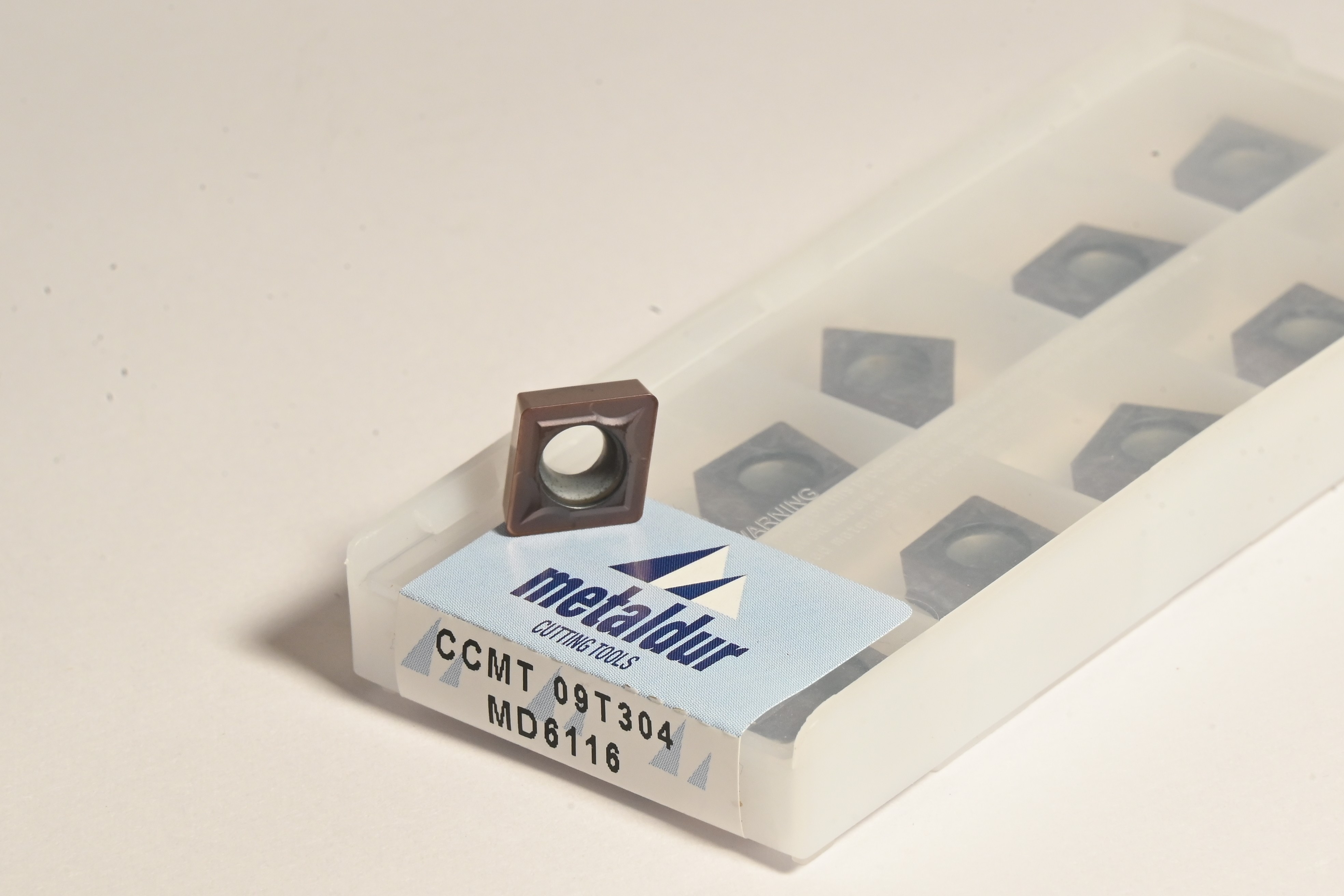
POSITIVE TURNING INSERTS Suppliers in India for Precision CNC Turning
Indexable carbide inserts with a positive cutting geometry and relief angle — lower cutting forces, smooth cutting action and good surface finish on steel, stainless steel, aluminium and brass.
Positive Turning Inserts for CNC Turning and Precision Machining
Metaldur is a trusted Positive Turning Inserts Supplier in India, offering quality carbide inserts for CNC turning and precision machining applications at competitive and affordable prices. We provide a wide range of positive turning inserts to CNC machine shops, engineering companies, manufacturers, dealers, distributors, wholesalers, and industrial buyers across India. Importers of Positive Turning Inserts in India can enquire about product specifications, availability, and sourcing requirements based on their business needs.
Our Positive Turning Inserts are suitable for finishing, semi-finishing, profiling, and other CNC turning operations where lower cutting forces, accurate machining, and good surface finish are important. We focus on supplying reliable products at affordable and competitive prices to help businesses manage their tooling costs without compromising on machining requirements.
Whether you need a small quantity for your machine shop or bulk quantities for industrial production and distribution, Metaldur can help you source suitable positive turning inserts with dependable supply and pan-India delivery. Traders of Positive Turning Inserts can source different sizes, grades, and specifications to meet the requirements of their customers and various CNC machining applications.
Looking for a stronger edge? Explore our Negative Turning Inserts Supplier in India page for double-sided inserts built for heavy roughing.
Negative Turning Inserts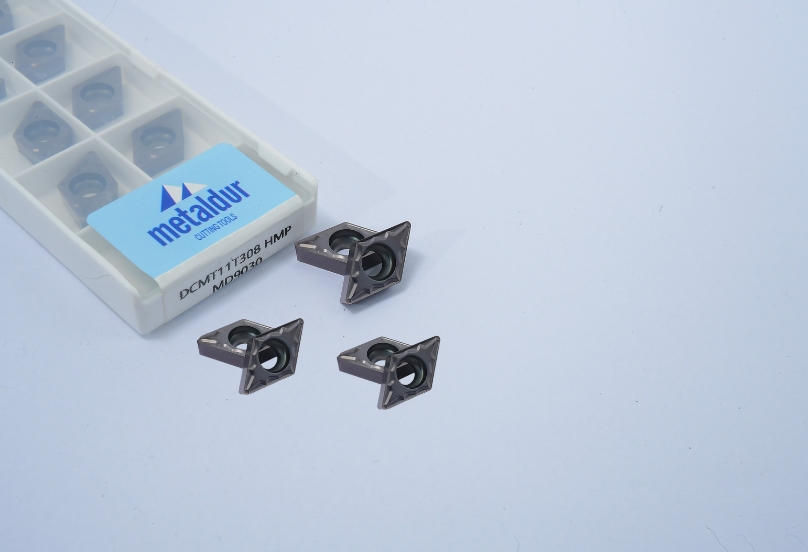
Why Choose Positive Turning Inserts in India?
Metaldur supplies Positive Turning Inserts to customers across India, including CNC machine shops, engineering companies, dealers, distributors, wholesalers, and industrial buyers.
We understand that tooling costs are an important consideration for every business. That’s why we focus on providing quality products at affordable and competitive prices while maintaining dependable supply and customer support.
Competitive & Affordable Prices
Cost-effective tooling solutions that help businesses manage machining and tooling expenses.
Quality
Consistent quality standards maintained across every product we supply.
Quality Products
Products selected to meet the requirements of different CNC machining applications and industrial buyers.
Wide Product Range
Along with Positive Turning Inserts, we supply a broad range of CNC cutting tools and accessories.
Bulk Order Support
We serve dealers, distributors, wholesalers, and industrial buyers who require bulk quantities.
Pan India Supply
CNC cutting tools supplied across India with dependable logistics and secure packaging.
Product Assistance
Our team can help identify suitable products based on your machining applications and requirements.
Reliable Customer Support
Responsive communication, quotations, product information, and assistance before and after purchase.
Positive Turning Inserts Specifications
Depending on the product range, specifications may include the following. For exact specifications, product availability, and pricing, contact our team with your required insert code or machining application.
Specification Fields
Product Overview
| Product Name | Positive Turning Inserts |
| Product Type | Indexable Carbide Turning Inserts |
| Insert Material | Premium Carbide |
| Clearance Angle | Positive (greater than 0°) |
| Cutting Faces | Usually Single-Sided |
| Machine Compatibility | CNC Lathes & Turning Centres |
| Operations | Finishing, Semi-Finishing, Profiling, Internal & External Turning |
| Suitable Materials | Steel, Stainless Steel, Aluminium, Brass, Copper, Cast Iron |
| Insert Shapes | CCMT, DCMT, VCMT, TCMT, VBMT, WCMT, CCGT, DCGT |
| Insert Grades | P, M, K, N, S, H |
| Supply Area | PAN India |
How to Choose the Right Positive Turning Insert
Selecting the right insert is important for achieving reliable machining performance. Before choosing an insert, consider the following seven factors in order.
Simplified Guide: How to Choose the Right Positive Turning Insert
Rhombic insert for general use, facing and longitudinal turning.
Rhombic insert with narrower profile, ideal for finishing.
Square insert for general turning with strong cutting edges.
Triangular insert for profiling and internal turning applications.
Rhombic insert, excellent for fine profiling and undercutting.
For mild steel, carbon steel, and alloy steel with excellent wear resistance.
Machines stainless steel while maintaining stability and surface quality.
Reliable performance for cast iron and abrasive materials.
Ground and polished edges for aluminium, copper, brass and plastics.
For high-temperature alloys used in aerospace and specialised engineering.
Identify whether you are machining steel, stainless steel, aluminium, brass, or another material.
Consider whether the application involves finishing, semi-finishing, profiling, internal turning, or another operation.
Choose an appropriate insert shape and geometry according to the component design and machining requirement.
The correct grade should match the workpiece material and cutting conditions.
Coated and uncoated options may be selected depending on the material, speed, and application.
The nose radius affects surface finish, cutting forces, and machining performance.
Cutting speed, feed rate, depth of cut, and machine conditions should be considered when selecting the insert.
The right combination of the seven factors above gives predictable finish, tool life and cost per part.
Why Choose Positive Turning Inserts for CNC Turning?
The cutting geometry of a positive turning insert can provide several practical benefits in CNC machining. The sharper cutting action helps the insert enter the material with less resistance, making it suitable for applications where lower cutting forces are preferred. As a Supplier of Positive Turning Inserts, Metaldur provides suitable products for CNC turning applications at competitive and affordable rates, with supply available across India.
Positive turning inserts can be useful for
The actual performance of an insert depends on the correct combination of insert geometry, grade, coating, cutting parameters, workpiece material, and machine setup.
Common Types of Positive Turning Inserts
Each geometry suits a different access angle and profile. Hover any shape to see it in detail.
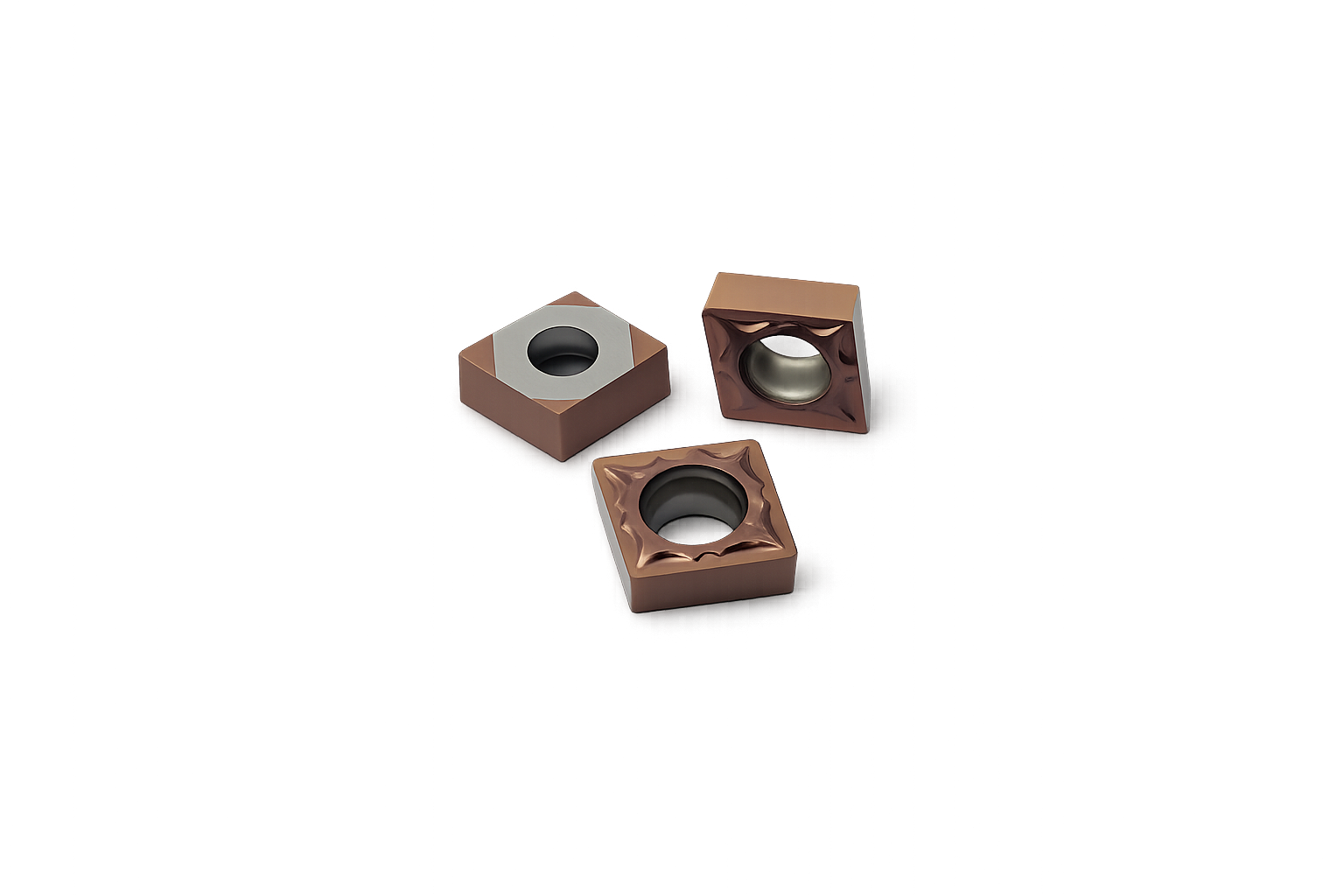
Positive diamond-shaped inserts designed for internal and external turning where lower cutting forces are required.
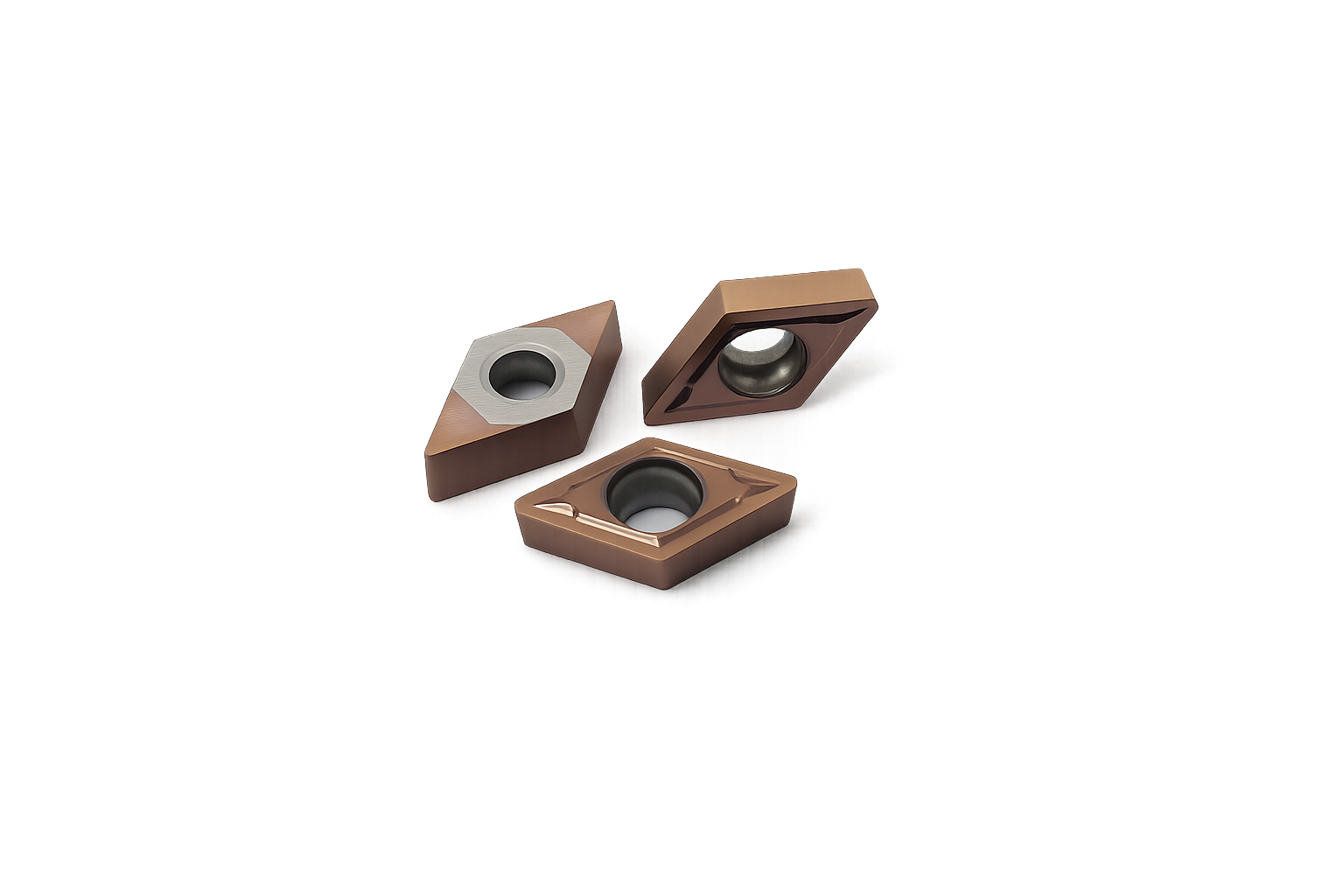
Positive 55° diamond inserts commonly used for finishing and profiling operations.
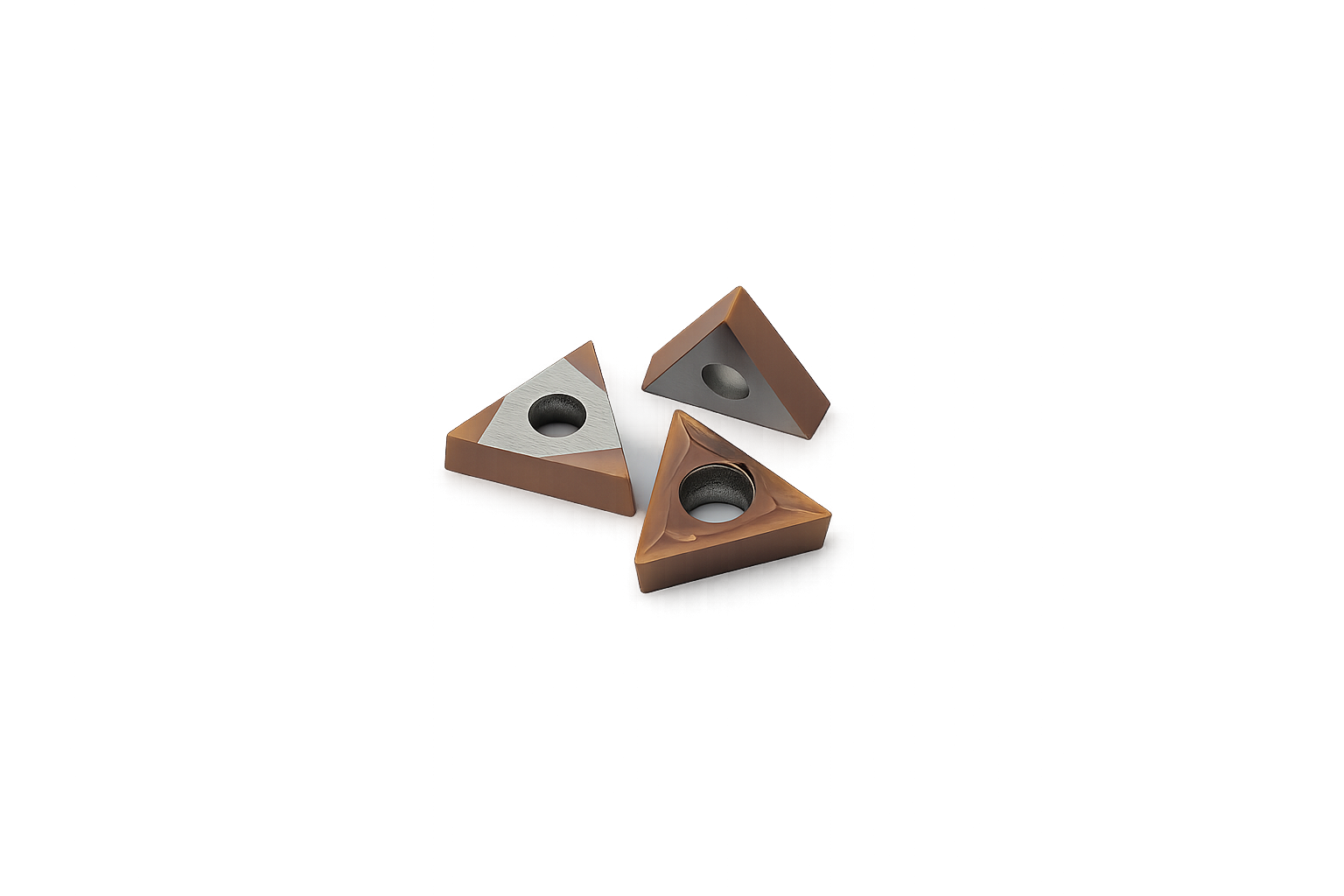
Positive triangular inserts suitable for internal turning, boring and general machining.
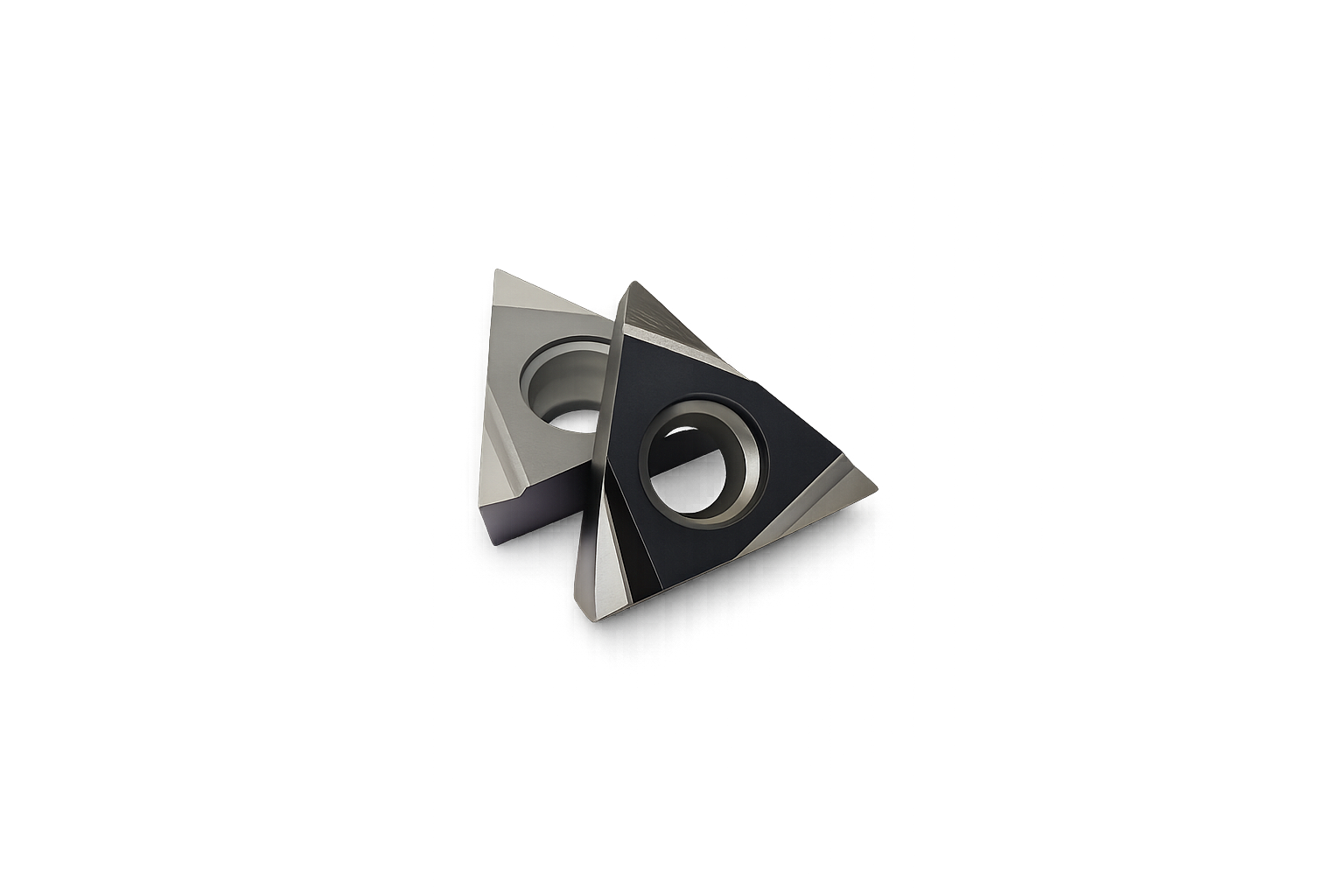
Positive inserts used for aluminium and non-ferrous machining applications.
Why Industrial Buyers Choose Metaldur
Eight things dealers, distributors and production shops tell us matter most when they place a repeat order.
Bulk Quantity Available
Fast Quotation
PAN India Dispatch
Technical Guidance
Multiple Insert Grades
Consistent Stock
Dealer Support
Secure Packaging
Key Features, Benefits & Applications of Positive Turning Inserts
Positive Turning Inserts are designed for smooth, accurate, and efficient CNC turning. Their positive cutting geometry reduces cutting forces, making them ideal for finishing, semi-finishing, and precision machining applications.
Key Features
Key Benefits
Common Applications
Key Features of Positive Turning Inserts
Metaldur supplies positive turning inserts for a variety of CNC turning applications. Depending on the product and application, key features may include:
Positive Cutting Geometry
A positive relief angle lets the edge enter the workpiece more easily.
Sharp Cutting Edge
A keener edge shears the material instead of pushing through it.
Lower Cutting Forces
Less pressure at the cut, which matters on smaller and thin-walled parts.
Indexable Design
Worn edges are indexed or replaced quickly, keeping downtime short.
Different Insert Geometries
CCMT, DCMT, TCMT, VCMT and more, for different profiles and access angles.
Coated & Uncoated Options
Coated for steel and stainless; uncoated and polished for non-ferrous work.
Our CNC Cutting Tool Range
Along with Positive Turning Inserts, Metaldur supplies a range of CNC cutting tools and accessories. Hover any segment to highlight it, then click through to that product page.
Frequently Asked Questions About Positive Turning Inserts
Answers to common questions about selecting, using and sourcing positive turning inserts for CNC machining.
What are Positive Turning Inserts?
Positive Turning Inserts are carbide cutting inserts designed with a positive rake and clearance angle. They require lower cutting forces and are commonly used for CNC turning, finishing, semi-finishing, and machining smaller or delicate components.
What are Positive Turning Inserts used for?
Positive Turning Inserts are commonly used for:
- CNC Turning
- External Turning
- Internal Turning
- Facing
- Profiling
- Finishing Operations
They are suitable for applications where lower cutting forces and good surface finish are required.
What is the difference between Positive and Negative Turning Inserts?
The main difference is the cutting geometry. Positive Turning Inserts generally have a positive clearance angle and require lower cutting forces, making them suitable for finishing and light-to-medium machining. Negative Turning Inserts offer stronger cutting edges and are commonly preferred for heavy-duty turning and rough machining. See our Negative Turning Inserts page for the heavy-duty range.
Which materials can be machined with Positive Turning Inserts?
Depending on the insert grade and geometry, Positive Turning Inserts can be used for machining:
- Mild Steel
- Carbon Steel
- Alloy Steel
- Stainless Steel
- Aluminium
- Brass
- Copper
- Cast Iron
- Other Engineering Materials
Are Positive Turning Inserts suitable for CNC machines?
Yes. Positive Turning Inserts are widely used in CNC turning machines and machining applications. The correct insert geometry, grade, and cutting parameters should be selected according to the workpiece material and machining operation.
What are the benefits of using Positive Turning Inserts?
The key benefits include lower cutting forces, reduced power consumption, smoother cutting action, good surface finish, and suitability for precision turning and finishing operations.
How do I choose the right Positive Turning Insert?
The right insert depends on factors such as workpiece material, machining operation, insert shape, nose radius, grade, chip breaker, cutting depth, feed rate, and cutting speed. Metaldur can help you select a suitable insert based on your machining requirements.
Can Positive Turning Inserts be used for finishing operations?
Yes. Positive Turning Inserts are widely used for finishing and semi-finishing because their cutting geometry can help achieve good surface quality and smooth machining performance.
What types of Positive Turning Inserts are available?
Positive Turning Inserts are available in different shapes, sizes, grades, nose radii, and chip breaker designs. The suitable option depends on the machining application and material being cut.
Where can I buy Positive Turning Inserts in India?
You can buy Positive Turning Inserts from Metaldur, a Positive Turning Inserts Supplier in India, supplying CNC cutting tools to engineering companies, CNC machine shops, dealers, distributors, and industrial buyers across India.
Does Metaldur supply Positive Turning Inserts in bulk?
Yes. Metaldur supplies Positive Turning Inserts for bulk and industrial requirements. Dealers, distributors, machine shops, and businesses can contact Metaldur for product availability, pricing, and quotations.
How can I get the price of Positive Turning Inserts?
The price of Positive Turning Inserts depends on the insert type, grade, geometry, quantity, and application. You can contact Metaldur with your requirements to get current pricing and a quotation.
Why choose Metaldur for Positive Turning Inserts?
Metaldur supplies Positive Turning Inserts and other CNC cutting tools at competitive and affordable prices for customers across India. We support bulk requirements and help customers find suitable tooling options for their machining applications.
Does Metaldur supply Positive Turning Inserts across India?
Yes. Metaldur supplies Positive Turning Inserts and other CNC cutting tools across India, serving engineering industries, CNC machine shops, dealers, distributors, and industrial buyers.
How can I order Positive Turning Inserts from Metaldur?
You can contact Metaldur through the website, WhatsApp, phone, or email. Share your required insert type, grade, quantity, or machining application, and the team can assist with product availability and pricing.
Get a Quote for Positive Turning Inserts at Competitive Prices
Looking for a reliable Positive Turning Inserts Supplier in India? Metaldur supplies quality CNC cutting tools at competitive prices across India. Whether you are a CNC machine shop, engineering company, dealer, distributor, wholesaler, or industrial buyer, we can help you source suitable tooling solutions for your requirements.
Request Your Quote
Send us your requirement for the lowest guaranteed price — or find us on Google.
Download Catalog