On this page
- What Are Carbide Inserts?
- Why Choose Metaldur for Carbide Inserts?
- Why Are Carbide Inserts Important?
- Carbide Inserts Specifications
- Benefits of Using Carbide Inserts
- Longer Tool Life
- Better Surface Finish
- Higher Productivity
- Lower Production Costs
- Easy Tool Replacement
- Excellent Wear Resistance
- Types of Carbide Inserts
- 1. Negative Turning Inserts
- 2. Positive Turning Inserts
- 3. Milling Inserts
- 4. Drilling Inserts
- 5. Threading Inserts (MMT)
- 6. Parting & Grooving Inserts
- 7. PCD Inserts
- 8. CBN Inserts
- 9. Aluminium Inserts (MDAL)
- 10. Cermet Inserts (MDC)
- Which Materials Are Machined Using Carbide Inserts
- Industries That Use Carbide Inserts
- How to Choose the Right Carbide Insert
- Frequently Asked Questions About Carbide Inserts
- 1. What are carbide inserts used for?
- 2. Which carbide insert is best for stainless steel?
- 3. What is the difference between positive and negative turning inserts?
- 4. What are milling inserts used for?
- 5. What are PCD inserts used for?
- 6. What are CBN inserts used for?
- 7. Which insert is best for aluminium?
- 8. Can carbide inserts be replaced?
- 9. Which industries use carbide inserts?
- 10. What materials can carbide inserts machine?
- 11. How do I choose the right carbide insert?
- 12. Where can I buy carbide inserts in India?
- Contact Us
In modern CNC machining, choosing the right cutting tool is one of the most important decisions for achieving accurate results and reducing production costs. Whether you are machining steel, stainless steel, cast iron, aluminium, or other engineering materials, using the correct Carbide Inserts can improve machining performance, extend tool life, and deliver a better surface finish. These replaceable cutting tips are widely used in CNC lathes, milling machines, drilling machines, and machining centres because they provide consistent cutting performance while reducing machine downtime.
If you are looking for a trusted Carbide Inserts Supplier in India, Metaldur offers a wide range of inserts for different machining applications. We supply quality cutting tools to machine shops, engineering industries, dealers, wholesalers, and manufacturing businesses across India. Our focus is to provide reliable products at affordable prices without compromising on quality, helping customers improve productivity while keeping tooling costs under control.
What Are Carbide Inserts?
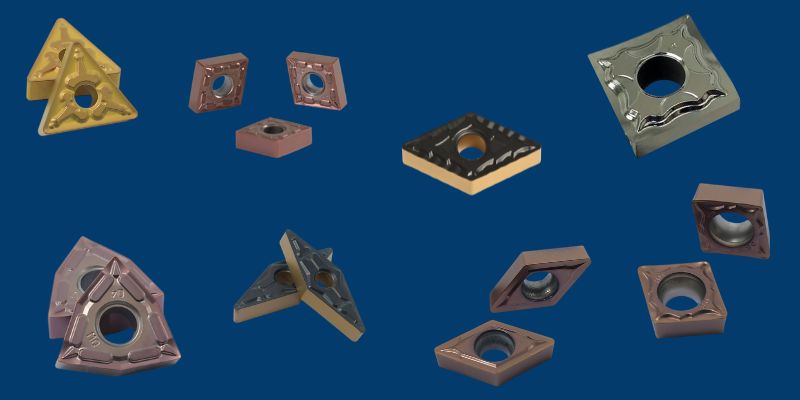
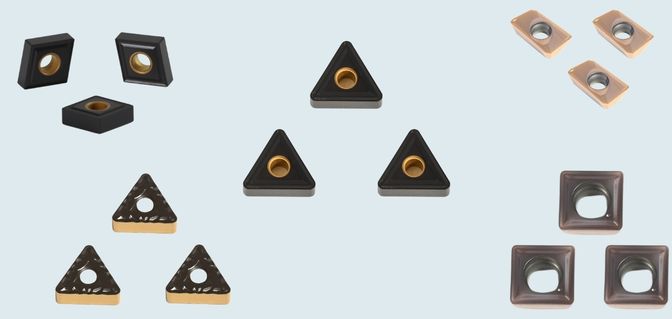
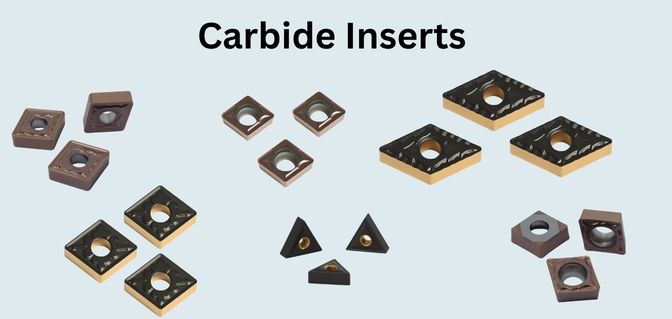
Carbide inserts are small replaceable cutting tips used in CNC machining for turning, milling, drilling, threading, grooving, and boring operations. Instead of replacing the complete cutting tool when it becomes worn, only the insert needs to be changed. This makes machining more economical and reduces production downtime.
Carbide inserts are manufactured from hard carbide material that can withstand high cutting temperatures and heavy machining conditions. They are available in various shapes, grades, coatings, and geometries to suit a range of machining operations and workpiece materials. Choosing the correct insert helps achieve better cutting performance, longer tool life, and higher machining accuracy.
Why Choose Metaldur for Carbide Inserts?
Finding a reliable supplier is just as important as selecting the right insert. At Metaldur, we understand the needs of CNC machine shops, engineering companies, industrial manufacturers, dealers, and wholesalers across India.
We supply a complete range of carbide inserts for different machining applications at competitive prices without compromising on quality. Our goal is to provide dependable cutting tools that help customers improve productivity while keeping machining costs under control.
Why Are Carbide Inserts Important?
Manufacturing industries require cutting tools that can deliver precision, consistency, and high productivity. Carbide inserts play a key role in achieving these goals by providing stable cutting performance during demanding machining operations.
Compared to conventional cutting tools, carbide inserts offer higher wear resistance, improved heat resistance, and better chip control. Because they are replaceable, they also reduce tooling costs and minimise machine downtime. This makes them an ideal choice for industries that require continuous production and high machining efficiency.
Carbide Inserts Specifications
| Product Name | Carbide Inserts |
| Material | Premium Tungsten Carbide |
| Insert Types | Negative Turning Inserts, Positive Turning Inserts, Milling Inserts, Drilling Inserts, Threading Inserts (MMT), Parting & Grooving Inserts, PCD Inserts, CBN Inserts, Aluminium Inserts (MDAL), Cermet Inserts (MDC) |
| Machining Operations | Turning, Milling, Drilling, Threading, Grooving, Boring & Parting |
| Compatible Materials | Carbon Steel, Stainless Steel, Cast Iron, Alloy Steel, Aluminium, Copper, Brass, Titanium, Hardened Steel & Composite Materials |
| Insert Shapes | CNMG, DNMG, TNMG, VNMG, WNMG, SNMG, CCMT, DCMT, TCMT, VBMT & Custom Profiles |
| Available Coatings | CVD Coated, PVD Coated & Uncoated |
| Applications | CNC Lathes, VMC Machines, Horizontal & Vertical Machining Centres, Milling Machines & Drilling Machines |
| Industries Served | Automotive, Aerospace, Railway, Oil & Gas, Heavy Engineering, Die & Mould, Tool Rooms, General Engineering & Precision Manufacturing |
| Surface Finish | Suitable for Roughing, Semi-Finishing & Finishing Operations |
| Key Benefits | High Wear Resistance, Excellent Heat Resistance, Longer Tool Life, Superior Chip Control & High Machining Accuracy |
| Supply Availability | Ready Stock Available |
| Order Type | Single Pieces, Bulk Orders & Wholesale Supply |
| Delivery Coverage | PAN India Delivery |
Benefits of Using Carbide Inserts
Using the right carbide insert can improve machining quality and reduce overall production costs. Some of the major benefits include:
Longer Tool Life
Carbide inserts are designed to withstand high temperatures and continuous machining, helping them last longer than conventional cutting tools.
Better Surface Finish
The correct insert geometry produces smoother surfaces and more accurate dimensions, reducing the need for additional finishing operations.
Higher Productivity
Carbide inserts support higher cutting speeds and feeds, allowing manufacturers to complete jobs faster and increase production output.
Lower Production Costs
Because only the insert is replaced instead of the complete tool, tooling expenses are reduced and machining becomes more economical.
Easy Tool Replacement
Replaceable inserts minimise machine downtime, allowing operators to continue production quickly without changing the entire tool holder.
Excellent Wear Resistance
Quality carbide inserts resist wear even during continuous machining, making them suitable for demanding industrial applications.
Types of Carbide Inserts
Different machining operations require different insert designs. Choosing the right insert improves machining performance, increases tool life, and helps achieve better production efficiency.
1. Negative Turning Inserts
Negative Turning Inserts are commonly used for heavy-duty turning applications where strength and durability are essential. These inserts have multiple cutting edges, allowing both sides to be used before replacement, making them an economical choice for high-volume production.
They are suitable for rough turning, interrupted cuts, and machining materials such as steel and cast iron. Their strong cutting edge provides excellent stability, making them ideal for demanding machining conditions.
Applications
- Heavy turning operations
- Rough machining
- Steel machining
- Cast iron components
- High-production CNC machining
Benefits
- Multiple cutting edges
- Longer tool life
- Strong cutting performance
- Cost-effective for bulk production
2. Positive Turning Inserts
Positive Turning Inserts are designed with a sharp cutting edge and positive rake angle, requiring lower cutting forces during CNC turning operations. They are ideal for finishing, semi-finishing, thin-walled components, and applications where reduced vibration and smooth cutting are important.
These inserts help achieve excellent surface finish and accurate machining results. They are commonly used for machining stainless steel, aluminium, mild steel, and other suitable materials where lower cutting forces and good chip control are required.
Applications
- Finish turning
- Semi-finishing operations
- Stainless steel machining
- Aluminium machining
- Precision components
- Thin-wall machining
- Light-duty cutting
Benefits
- Lower cutting forces
- Better surface finish
- Improved chip control
- Reduced vibration
- Higher machining accuracy
- Suitable for precision turning
3. Milling Inserts
Milling Inserts are widely used in CNC milling cutters for face milling, shoulder milling, slot milling, and profile milling operations. They help remove material efficiently while maintaining dimensional accuracy and excellent surface quality.
Available in different grades and geometries, milling inserts can machine steel, stainless steel, cast iron, and many other engineering materials with reliable cutting performance.
Applications
- Face milling
- Shoulder milling
- Slot milling
- Profile milling
- CNC machining centres
Benefits
- High material removal rate
- Better machining efficiency
- Consistent cutting performance
- Improved productivity
4. Drilling Inserts
Drilling Inserts are used in indexable drilling systems to produce accurate holes with better chip evacuation and stable cutting performance. They are designed for high-speed drilling applications and help improve drilling accuracy while reducing machining time.
These inserts are suitable for steel, alloy steel, cast iron, and other industrial materials used in manufacturing.
Applications
- CNC drilling
- Deep-hole drilling
- Production machining
- Industrial drilling operations
Benefits
- Accurate hole dimensions
- Better chip control
- Increased drilling efficiency
- Reduced production time
5. Threading Inserts (MMT)
Threading Inserts (MMT) are specially designed to produce accurate internal and external threads on CNC lathes and turning centres. They help create clean thread profiles with excellent dimensional accuracy and repeatability. These inserts are available in different thread pitches and profiles to suit a wide range of industrial applications.
Using the correct threading insert reduces machining time, improves thread quality, and increases tool life. They are commonly used in industries that manufacture bolts, nuts, pipe fittings, hydraulic components, and precision engineering parts.
Applications
- Internal threading
- External threading
- Pipe threads
- Automotive components
- Engineering industries
Benefits
- Accurate thread profiles
- Better surface finish
- Consistent thread quality
- Long tool life
- Reduced machining time
6. Parting & Grooving Inserts
Parting and Grooving Inserts are designed for cutting off components and producing precise grooves in metal parts. These inserts offer excellent chip control, clean cutting performance, and improved dimensional accuracy. Their special geometry helps reduce vibration and ensures stable machining even in demanding production environments.
They are widely used in CNC turning centres for manufacturing shafts, rings, automotive components, and engineering parts where precision is essential.
Applications
- Parting operations
- Grooving operations
- Cut-off machining
- Precision components
- Production machining
Benefits
- Smooth cutting performance
- Better chip evacuation
- High dimensional accuracy
- Reduced vibration
- Improved productivity
7. PCD Inserts
PCD (Polycrystalline Diamond) Inserts are ideal for machining non-ferrous materials and highly abrasive workpieces. They provide exceptional wear resistance and produce an excellent surface finish, making them suitable for high-speed machining operations.
These inserts are commonly used for machining aluminium, copper, brass, plastics, graphite, and composite materials. They are widely preferred in industries where precision and long tool life are important.
Applications
- Aluminium machining
- Copper and brass machining
- Plastic components
- Composite materials
- Aerospace parts
Benefits
- Excellent wear resistance
- Superior surface finish
- High-speed machining
- Long service life
- Reduced production costs
8. CBN Inserts
CBN (Cubic Boron Nitride) Inserts are specially developed for machining hardened steel, cast iron, and other hard materials. They maintain their cutting performance at high temperatures and provide excellent wear resistance during continuous machining.
CBN inserts are commonly used in the automotive, bearing, die & mould, and heavy engineering industries where high precision and durability are required.
Applications
- Hardened steel machining
- Cast iron machining
- Bearing components
- Gear manufacturing
- Precision finishing
Benefits
- High wear resistance
- Excellent heat resistance
- Long tool life
- Accurate machining
- Better productivity
9. Aluminium Inserts (MDAL)
Aluminium Inserts (MDAL) are specially designed for machining aluminium and other non-ferrous metals. Their polished cutting edges reduce material build-up and improve chip flow, resulting in smoother machining and excellent surface finishes.
These inserts are suitable for industries that require high-speed machining of lightweight materials, including automotive, aerospace, and electrical component manufacturing.
Applications
- Aluminium machining
- Non-ferrous metals
- Automotive parts
- Aerospace components
- Electrical products
Benefits
- Smooth surface finish
- Excellent chip evacuation
- High cutting speed
- Reduced built-up edge
- Longer insert life
10. Cermet Inserts (MDC)
Cermet Inserts (MDC) combine the properties of ceramic and carbide materials to deliver excellent wear resistance and outstanding surface finish. They are mainly used for finishing operations where dimensional accuracy and smooth machining are essential.
These inserts are suitable for continuous cutting applications and are widely used for machining steel and other engineering materials.
Applications
- Finish turning
- Precision machining
- Continuous cutting
- Steel components
- Industrial production
Benefits
- Excellent surface finish
- High wear resistance
- Longer tool life
- Stable cutting performance
- Better dimensional accuracy
Which Materials Are Machined Using Carbide Inserts
Carbide inserts are suitable for machining a wide variety of materials used in industrial production. Selecting the correct insert grade and geometry ensures better cutting performance and longer tool life.
Common materials include:
- Carbon Steel
- Stainless Steel
- Cast Iron
- Alloy Steel
- Aluminium
- Copper
- Brass
- Titanium
- Hardened Steel
- Plastic and Composite Materials
Different insert grades are designed for different materials, so choosing the right insert is essential for achieving the best machining results.
Industries That Use Carbide Inserts
Carbide inserts are widely used in industries where precision machining and high production efficiency are required.
Some of the major industries include:
- Automotive Industry
- Aerospace Industry
- Railway Industry
- Oil & Gas Industry
- Heavy Engineering
- Tool Rooms
- Die & Mould Manufacturing
- General Engineering
- Fabrication Industry
- CNC Machine Shops
- Industrial Equipment Manufacturing
- Precision Component Manufacturing
These industries rely on carbide inserts to improve machining accuracy, reduce production time, and achieve consistent quality.
How to Choose the Right Carbide Insert
Selecting the right carbide insert is important for achieving better machining quality, longer tool life, and lower production costs. The correct insert depends on the workpiece material, machining operation, cutting speed, and the finish you want to achieve.
1. Select the Right Material
Different inserts are designed for different materials. For example, CBN inserts are suitable for hardened steel, while PCD inserts are ideal for aluminium and non-ferrous metals.
2. Identify the Machining Operation
Choose an insert based on the operation you are performing, such as turning, milling, drilling, threading, or grooving. Using the correct insert improves machining accuracy and productivity.
3. Consider the Cutting Conditions
The cutting speed, feed rate, and depth of cut all affect insert performance. Matching the insert with the correct cutting parameters helps increase tool life and improve machining efficiency.
4. Choose the Correct Insert Geometry
Insert shape and geometry play an important role in chip control and surface finish. The right geometry helps reduce vibration, improve cutting stability, and achieve consistent machining results.
5. Check the Insert Coating
Coated inserts provide better wear resistance and heat protection, making them suitable for high-speed and continuous machining. Selecting the right coating can improve tool life and reduce machining costs.
Frequently Asked Questions About Carbide Inserts
1. What are carbide inserts used for?
Carbide inserts are used for turning, milling, drilling, threading, grooving, boring, and other CNC machining operations. They improve machining accuracy, reduce tool replacement costs, and increase production efficiency.
2. Which carbide insert is best for stainless steel?
Positive turning inserts with suitable coatings are commonly used for machining stainless steel because they provide better chip control, lower cutting force, and a smoother surface finish.
3. What is the difference between positive and negative turning inserts?
Positive inserts require less cutting force and are ideal for finishing operations, while negative inserts are stronger and better suited for heavy roughing and continuous production.
4. What are milling inserts used for?
Milling inserts are used in face milling, shoulder milling, slot milling, and profile milling operations. They help remove material efficiently while maintaining dimensional accuracy.
5. What are PCD inserts used for?
PCD inserts are mainly used for machining non-ferrous materials and abrasive workpieces such as aluminium, copper, brass, composites, plastics, and graphite in suitable applications. They provide excellent wear resistance, high cutting performance, and a good surface finish.
6. What are CBN inserts used for?
CBN inserts are used for machining hardened steel, cast iron, and other hard materials that require excellent wear resistance and precision finishing.
7. Which insert is best for aluminium?
Aluminium inserts (MDAL) are specially designed for machining aluminium and other non-ferrous metals. They provide smooth cutting performance and excellent chip evacuation.
8. Can carbide inserts be replaced?
Yes. Carbide inserts are replaceable cutting tools, allowing users to replace only the worn insert while reusing the same tool holder, reducing tooling costs.
9. Which industries use carbide inserts?
Carbide inserts are widely used in automotive, aerospace, railway, oil & gas, die & mould, tool rooms, fabrication, heavy engineering, and general manufacturing industries.
10. What materials can carbide inserts machine?
Carbide inserts can machine steel, stainless steel, cast iron, alloy steel, aluminium, brass, copper, titanium, hardened steel, plastics, and composite materials, depending on the insert grade.
11. How do I choose the right carbide insert?
Choose an insert based on the workpiece material, machining operation, cutting conditions, insert geometry, and required surface finish.
12. Where can I buy carbide inserts in India?
Metaldur supplies a complete range of carbide inserts for CNC machining, engineering industries, dealers, wholesalers, and industrial buyers across India at competitive prices.
At Metaldur, we supply a complete range of carbide inserts to meet the needs of machine shops, engineering industries, dealers, wholesalers, and manufacturing businesses across India. Our product range includes Negative Turning Inserts, Positive Turning Inserts, Milling Inserts, Drilling Inserts, Threading Inserts (MMT), Parting & Grooving Inserts, PCD Inserts, CBN Inserts, Aluminium Inserts (MDAL), and Cermet Inserts (MDC). With reliable quality, competitive pricing, and dependable service, we are committed to helping businesses find the right cutting tool solutions for their machining requirements.
Contact Us
Looking for a trusted Carbide Inserts Supplier in India? Choose Metaldur for high-quality carbide inserts designed for reliable CNC machining performance. We supply a comprehensive range of turning, milling, drilling, threading, and grooving inserts at competitive prices. With ready stock, bulk supply capability, fast delivery, and dedicated customer support, we help businesses across India meet their machining and production requirements efficiently.
Contact us today for:
- Bulk Orders
- Product Quotations
- Technical Support
- Insert Selection Guidance
- PAN India Delivery